Go Orange for Prader-Willi Syndrome: From Awareness Campaign to Global Movement
Why this campaign matters
Each year in May, communities across Australia and internationally are encouraged to Go Orange for Prader-Willi Syndrome (PWS), culminating on Prader-Willi Syndrome Awareness Day.
At face value, the campaign appears simple—wear orange, share a post, start a conversation.
But beneath that simplicity sits something far more important.
Go Orange exists because Prader-Willi Syndrome remains one of the most misunderstood genetic conditions, particularly in how it presents behaviourally, socially, and medically. Without understanding, individuals with PWS are too often met with judgement instead of support, exclusion instead of inclusion, and risk instead of protection.
This is the gap Go Orange was created to address.
A grassroots response to invisibility
Go Orange began in Victoria as a grassroots initiative driven by families and advocates who recognised a critical issue:
People could not support what they did not understand.
Historically, awareness of PWS had been low, not only in the general community, but across education systems, healthcare settings, and public services. Even when awareness existed, it was often superficial or inaccurate.
Common misconceptions included:
- Viewing hyperphagia as a lack of self-control
- Interpreting behaviours as deliberate or oppositional
- Underestimating the cognitive and physiological complexity of the condition
These misunderstandings have real consequences:
- Unsafe environments (particularly around food security)
- Inappropriate behavioural responses (punishment instead of structured support)
- Social exclusion and stigma
- Increased stress and risk for families
Go Orange emerged as a direct response to this systemic lack of understanding.
To understand more about the history, you can read about it here
Why orange? More than a colour
The choice of orange was not arbitrary.
Orange has historically been linked to hunger awareness, making it particularly relevant to PWS, where chronic hyperphagia (a neurological drive to eat) is one of the most defining and life-threatening features of the condition.
This is critical to understand:
Hyperphagia in PWS is not behavioural.
It is biological, neurological, and lifelong.
Research has consistently shown that individuals with PWS experience:
- Impaired satiety signalling
- Hormonal differences affecting hunger regulation
- Altered brain responses to food stimuli
This means that food-related behaviours are not a matter of choice or discipline—they are driven by the brain’s inability to regulate hunger appropriately.
By adopting orange, the campaign does more than create visibility.
It creates an entry point to educate the public about the reality behind the behaviour.

The evolution of Go Orange: From visibility to understanding
Like many awareness campaigns, Go Orange initially focused on visibility, encouraging people to wear orange and start conversations.
While visibility is important, it is not enough.
Awareness without understanding can actually reinforce misconceptions if the messaging is not clear.
Over time, the campaign has evolved in response to this:
Then: “Wear orange to raise awareness”
Now: “Use visibility to drive understanding, inclusion, and systemic change”
This shift reflects a broader recognition across disability advocacy:
Awareness is the starting point. Understanding is the outcome.
The purpose of Go Orange today
To be effective and credible, Go Orange must be clearly defined.
It is not a generic awareness campaign.
It has specific, evidence-based objectives.
1. To improve public understanding of PWS
The primary purpose is to ensure that the community understands that PWS is:
- A complex genetic condition
- Affecting the brain, body, and behaviour
- Requiring structured, consistent, and informed support
This includes reframing key traits:
- Hyperphagia → neurological drive, not greed
- Emotional outbursts → dysregulation, not defiance
- Rigidity → cognitive processing differences, not stubbornness
2. To reduce stigma and harmful misconceptions
Stigma around PWS is often rooted in misunderstanding, particularly around food-related behaviours.
Without education, individuals with PWS are at risk of being labelled as:
- “Difficult”
- “Manipulative”
- “Non-compliant”
These labels are not only inaccurate – they are harmful.
They influence how individuals are treated in:
- Schools
- Healthcare settings
- Community environments
Go Orange works to replace stigma with informed, compassionate understanding.
3. To promote safe and appropriate support
Understanding PWS is not just about empathy, it is about safety.
For example:
- Unrestricted access to food can be life-threatening
- Inconsistent boundaries can increase anxiety and dysregulation
- Lack of supervision can lead to risk
Go Orange creates opportunities to educate communities about:
- Food security
- Environmental supports
- Predictability and structure
These are not preferences, they are essential supports.
4. To drive inclusion across systems
Inclusion is often discussed, but not always understood in practice.
True inclusion for individuals with PWS requires:
- Adjustments in schools
- Awareness in workplaces
- Informed community participation
Without understanding, inclusion efforts can fail, placing individuals in environments that are not safe or supportive.
Go Orange helps bridge this gap by:
- Educating those who don’t understand, and want/need to
- Supporting peers and community members
5. To centre lived experience
Modern awareness campaigns are most effective when they are led by lived experience.
Go Orange has increasingly shifted to:
- Sharing real stories
- Amplifying family voices
- Highlighting daily realities
This ensures the campaign is not abstract—it is grounded in real-world impact.
6. To unify a global community
What began in Victoria is now recognised internationally.
The campaign connects:
- Families
- Organisations
- Researchers
- Advocates
This global alignment strengthens:
- Messaging consistency
- Advocacy impact
- Community connection
The real-world impact of understanding
When communities understand PWS:
- Children are better supported in schools
- Families experience less judgement and isolation
- Environments become safer
- Individuals have greater opportunity to thrive
When they don’t:
- Risk increases
- Mismanagement occurs
- Stigma persists
- Outcomes are compromised
This is not theoretical, it is experienced daily by families living with PWS.
The future of Go Orange
As the campaign continues to grow, there is an opportunity, and a responsibility, to strengthen its impact.
This includes:
- Ensuring messaging is clear, accurate, and consistent
- Moving beyond surface-level awareness into meaningful education
- Aligning awareness efforts with evidence-based understanding
More than awareness
Go Orange is more than a campaign.
It is a response to misunderstanding.
It is a driver of inclusion.
Most importantly, it is a reminder that:
When people understand Prader-Willi Syndrome, they respond differently.
And that difference has the power to change lives.
🧡 Colour the World Orange – May 15
Each year in MAY, we call on our community, and the broader public, to Colour the World Orange in recognition of Prader-Willi Syndrome.
This is more than a symbolic gesture.
It is a coordinated, visible act of awareness designed to spark conversation, challenge misconceptions, and bring Prader-Willi Syndrome into the public eye.
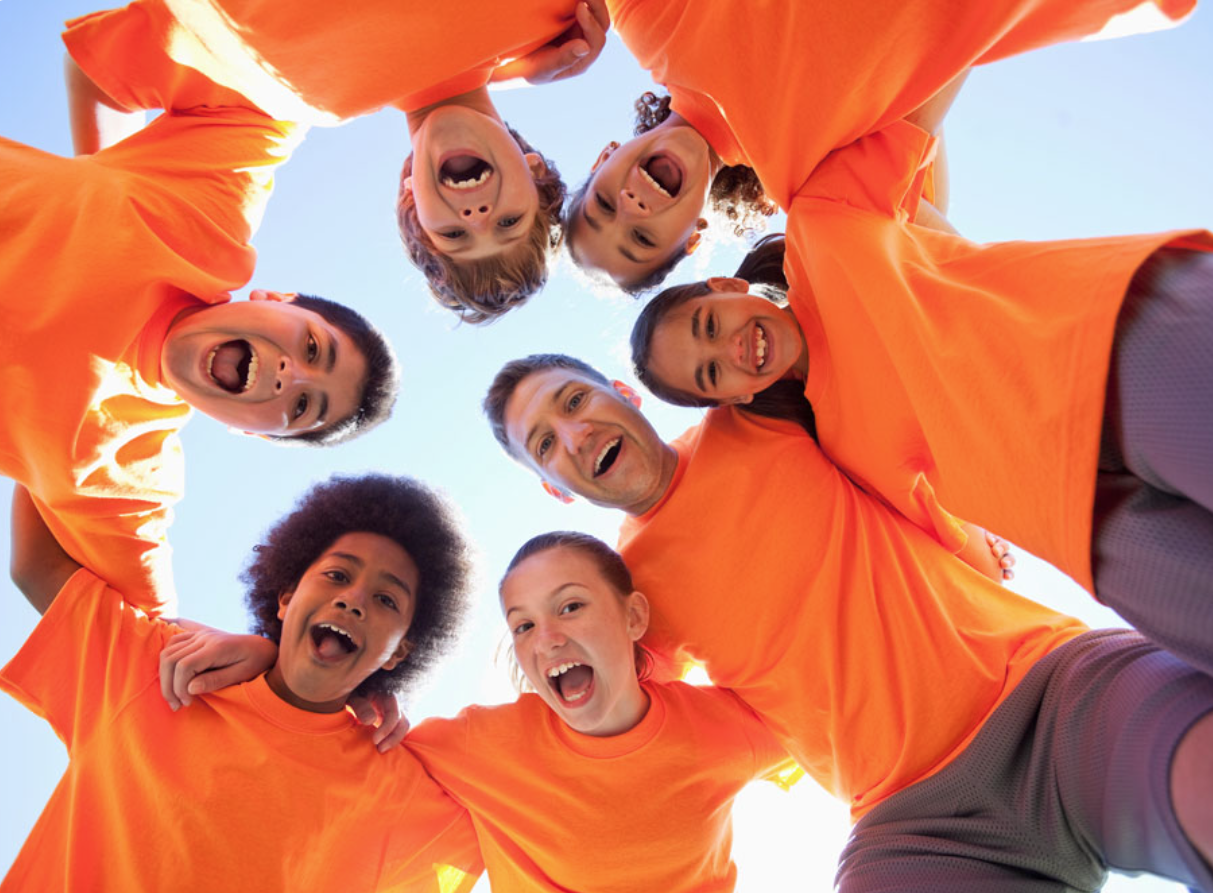
On this day, we invite individuals, families, schools, workplaces, and communities to take part in a simple but powerful way – by going orange.
- Wear your orange t-shirt.
- Paint your nails.
- Add a splash of orange to your outfit, your workplace, or your school environment.
- Host an “Orange Day” with balloons, streamers, and activities that encourage conversation and learning.
- Start discussions with peers, colleagues, and students about what Prader-Willi Syndrome is, and what it isn’t.
The action itself is simple – The impact is not.
Every orange item worn, every conversation started, and every space transformed creates an opportunity to increase understanding and visibility for a condition that is too often misunderstood.
Because when the world stops to ask, “Why orange?”— we create the moment to answer.
And that is where awareness becomes understanding.